Problem
Property management teams often run on local files, accounting software, property management system exports, inbox reports, banking portals, and manual follow-up. The work is sensitive, exception-heavy, and hard to move into generic SaaS without creating data-risk, adoption, or ownership problems. Missed insurance expirations, unclear cash timing, and manual accounting workflows all create operational risk.
Solution
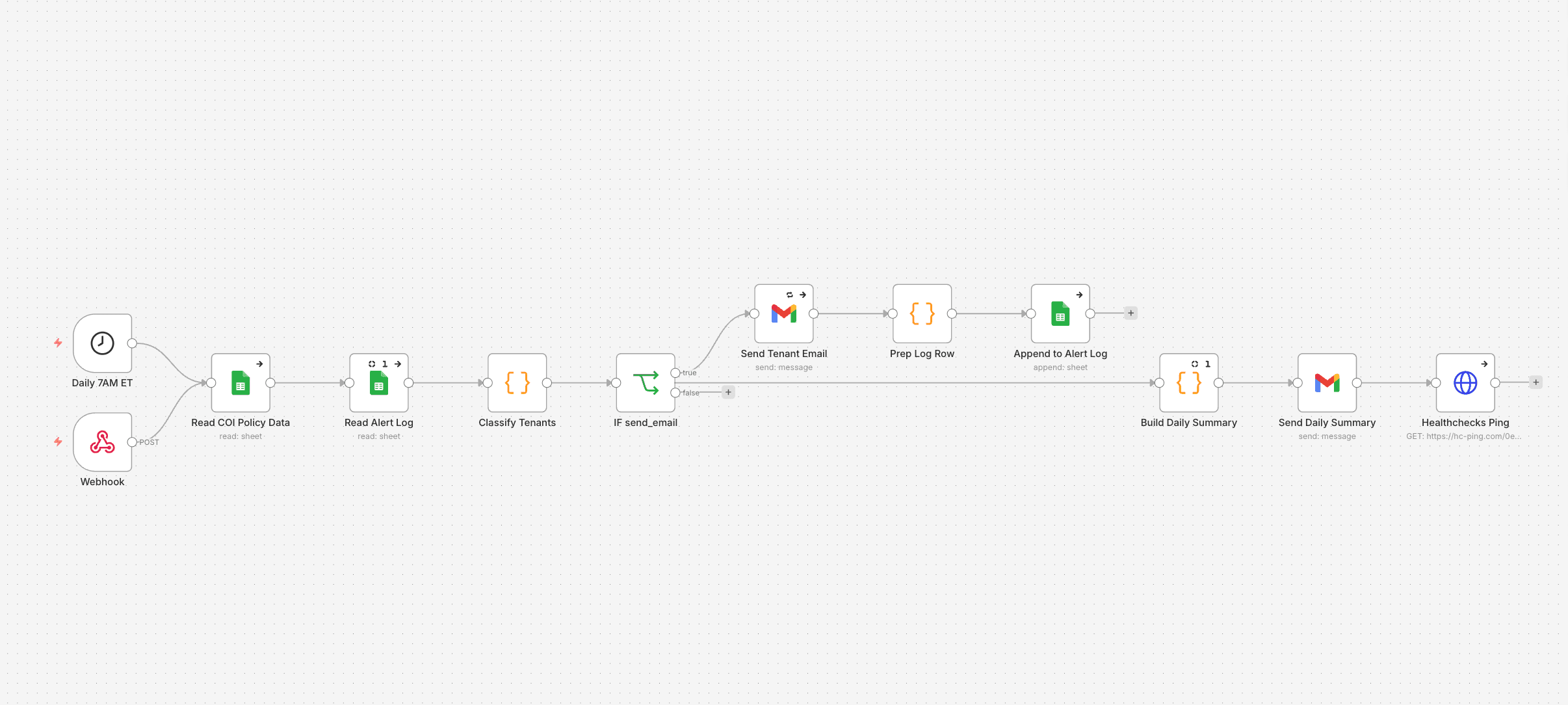
A local-first AI operations layer that runs inside the client's own environment and works around existing systems instead of replacing them. The foundation establishes self-hosted workflow infrastructure, secure local access, credential storage, logging, backup workflow, and monitoring. The first accepted workflow pattern is insurance expiration tracking. Scan the source spreadsheet, surface upcoming and overdue expirations, send configurable reminders, and produce a daily summary so exceptions are visible before they become urgent. The insurance workflow has been running in production daily since June 2026, with heartbeat monitoring and daily exception summaries.
Rent delinquency outreach
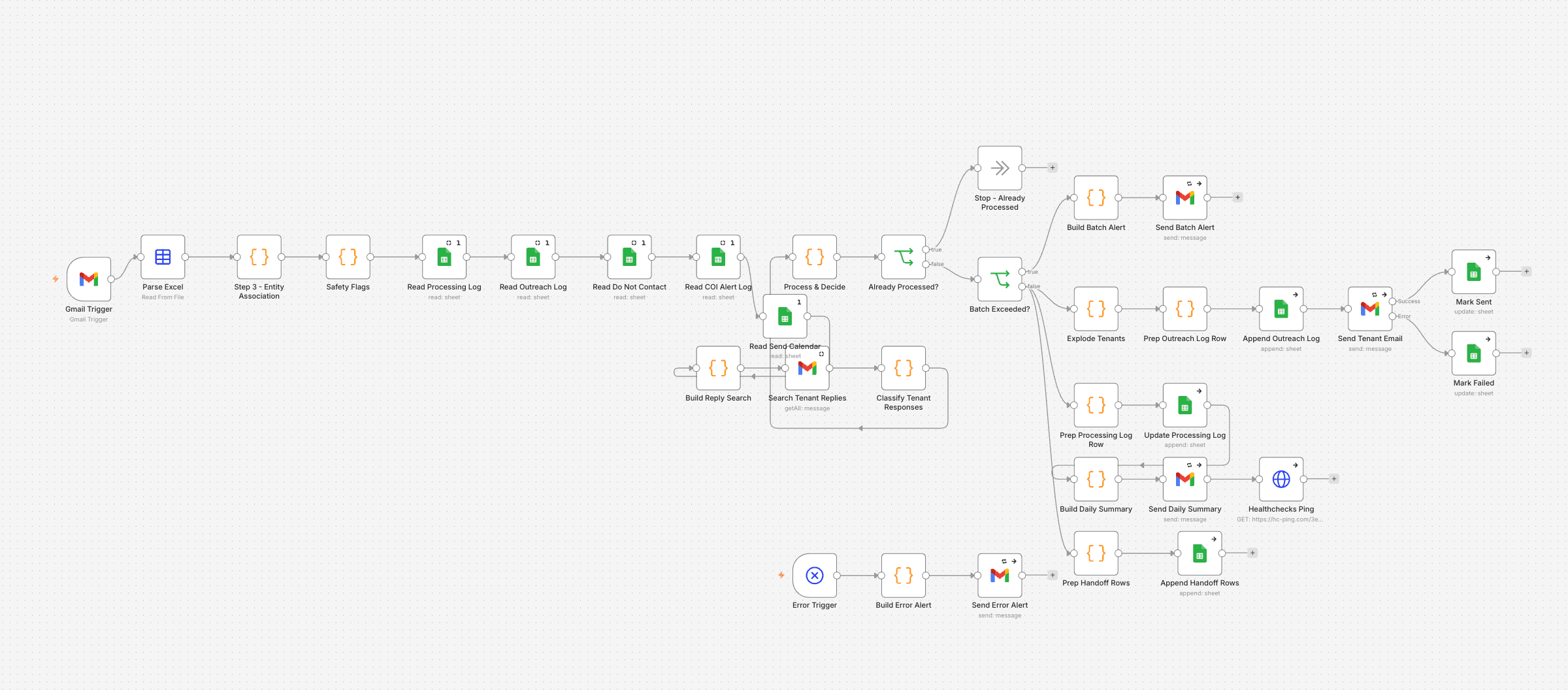
The second workflow, live since September 2026, handles rent delinquency outreach. It runs when the weekly delinquency report arrives from the property management system, checks each tenant against a do-not-contact list, sends each qualifying tenant a notice, copies the managers on every notice, and logs each send. It was tested before go-live.
Results
- Daily insurance expiration run emails on its own, logs each send, sends a daily summary
- Weekly rent delinquency outreach since September 2026 tested before go-live
- Heartbeat monitoring alerts if the workflow stops within hours
- Client-owned infrastructure self-hosted workflow environment, logs, backups, and runbooks
The architecture prioritizes client-owned infrastructure and conservative automation boundaries. Self-hosted workflow infrastructure runs inside the client's environment, with secure access to required files and systems, credential storage, monitoring, logging, backups, and runbooks. Testing decides when a workflow runs on its own, and every run is logged. The rent delinquency workflow checks a do-not-contact list, sends a notice to every remaining qualifying tenant, copies the managers on every notice, and logs each send. Insurance expiration tracking runs first because it has no accounting-system dependency and can prove the operating model quickly. Accounting-system-dependent workflows wait for the infrastructure and integration path.
Tech Stack
- n8n
- Local Automation Server
- Accounting System Integration
- Property Management System Exports
- Google Workspace
- Messaging Integration
- Audit Logging