Problem
Single-model AI analysis of crypto markets suffers from individual biases and hallucination risks. Traders need higher-confidence signals.
Solution
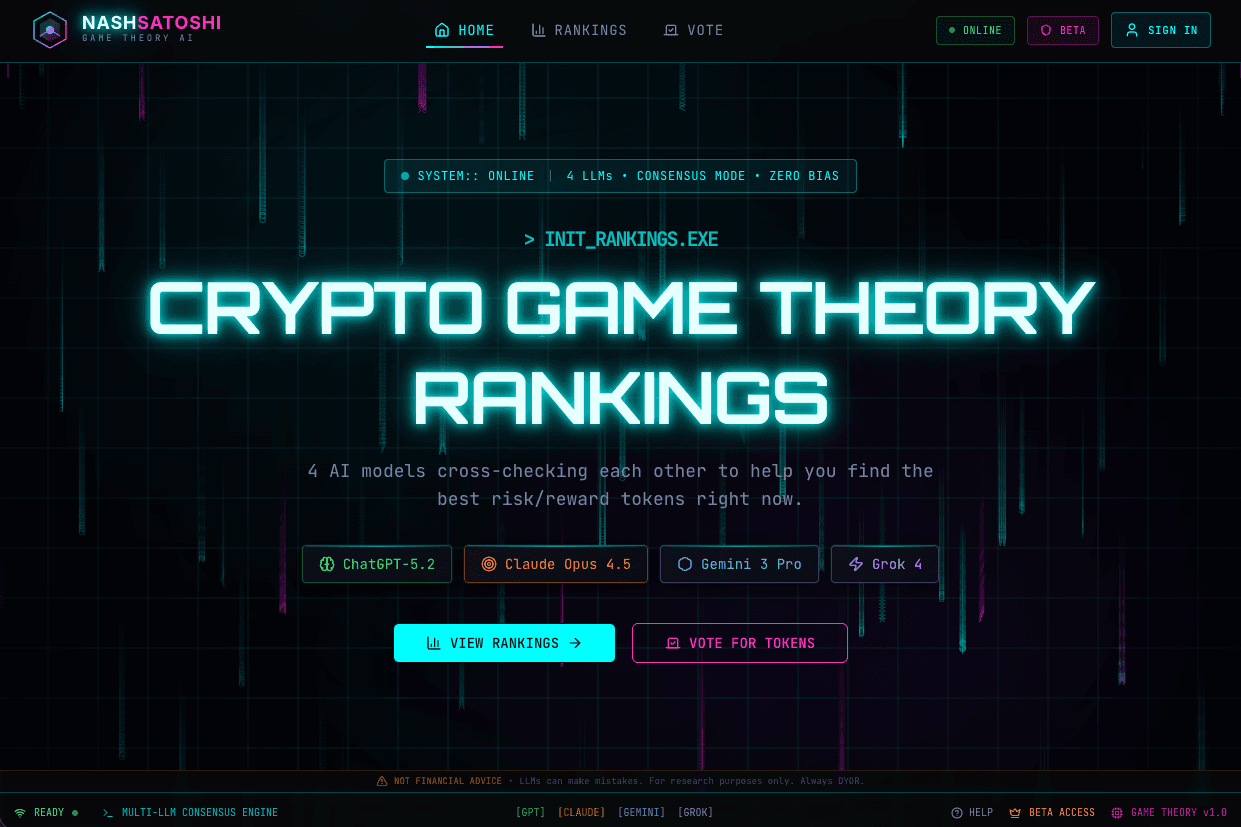
Four LLMs (Claude, GPT-4, Gemini, and Grok) independently analyze the same market data using game theory frameworks. A consensus engine cross-validates their outputs, flagging agreements as high-confidence signals and disagreements as areas requiring human judgment.
Screenshots
 1 / 6
1 / 6Results
- 4 LLMs cross-validating every analysis
- Nash equilibrium frameworks applied to crypto markets
- Single-model bias eliminated through consensus engine
- Live at nashsatoshi.com
Powered by a 32-node n8n pipeline (live March 2026) that replaced a manual Gumloop workflow. GPT-4, Gemini, Claude, and Grok score each asset in parallel via n8n webhook trigger. A synthesis step combines outputs into a weighted ranking. Each analysis query is sent simultaneously to all four models, which independently apply game theory frameworks (Nash equilibrium analysis, prisoner's dilemma modeling, mechanism design evaluation). A consensus engine cross-validates outputs, flagging agreements as high-confidence signals and disagreements as areas requiring human analysis. The Next.js frontend surfaces rankings, confidence scores, and model-level divergence indicators.
Tech Stack
- n8n
- Next.js
- TypeScript
- Claude API
- OpenAI API
- Google AI API
- Grok API
- PostgreSQL