General contractors and specialty trades
Usually the person responsible for vendor records, renewals, risk, finance, or operations.
Renewal chasing depends on someone remembering, and ownership of each certificate is unclear.
- Certificate records and expiration dates
- Renewal chasing and reminders
- Escalation when follow-up stalls
- Missing or duplicate records
- Operational exceptions, routed to a person
It does not judge whether coverage is adequate. That decision stays with your team.
How it works
- 1
Map certificates, dates, and owners
It starts with the COI Reliability Audit. I map where certificates live, which dates matter, and who owns each follow-up.
- 2
Set the rules
We agree what gets tracked, when reminders go out, when follow-up escalates, and which records go to a person.
- 3
Scope the build, or do not
If the audit supports a build, you get a fixed price with what counts as done written down. If it does not, I will say so.
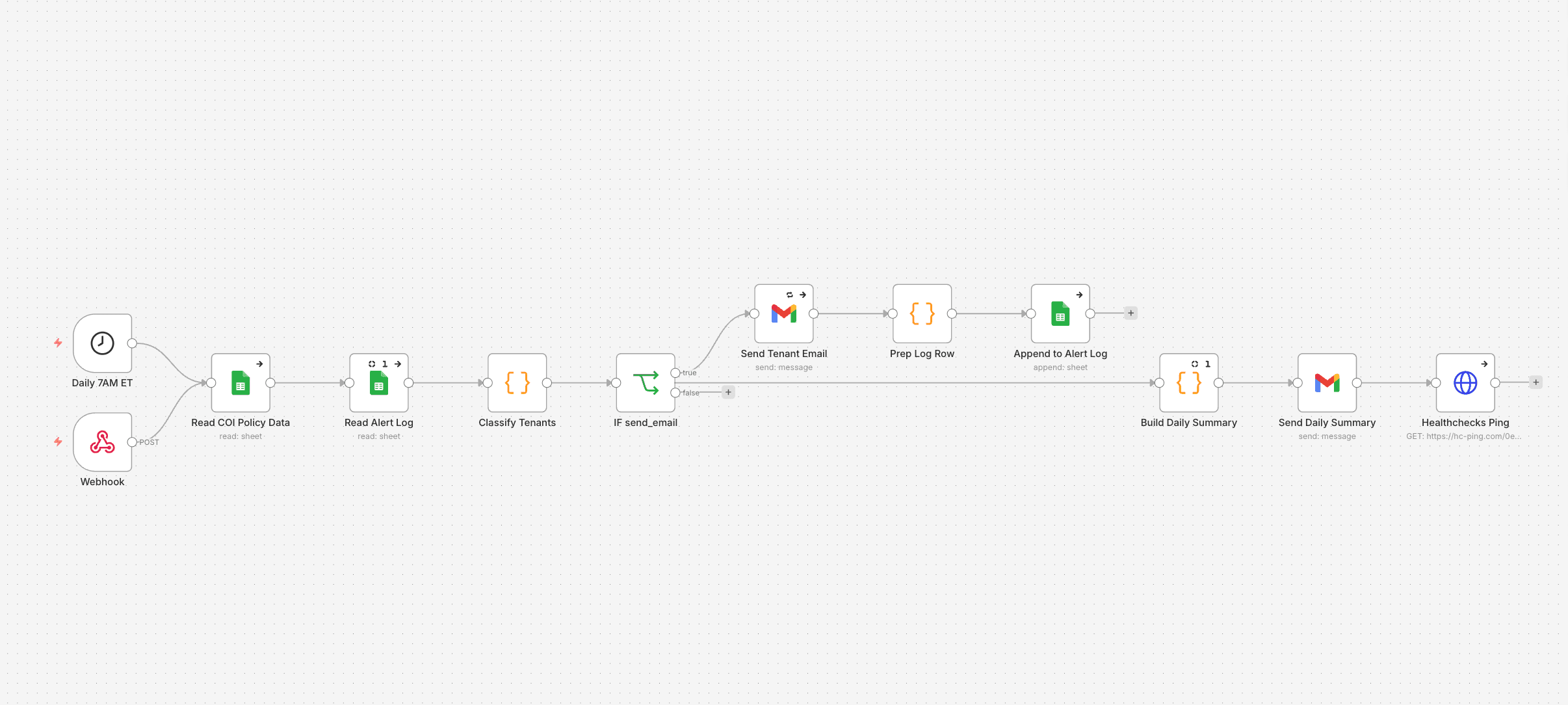
COI expiration tracking and renewal follow-up run in production.
A property operations client runs this workflow every day. It checks insurance expirations, emails reminders, logs each send, and sends a daily summary.
Start with the $1,500 COI Reliability Audit.
- Fixed fee, paid on signature.
- Delivered in five business days.
- The fee is credited if a build is signed within 30 days.
- Any implementation is scoped separately at a fixed price.
Bring the spreadsheet, folder, or inbox where certificates live now.
Book a COI Reliability Audit call